Liquid Cooling
Beyond the Cold Plate: Designing the Complete Thermal System
Why next-generation AI cooling requires coordination between chip-level heat capture, facility cooling loops, and the final destination of waste heat.
Introduction
As AI infrastructure becomes more thermally demanding, cooling design must move beyond individual components and address the complete heat-transfer system.
A server may use liquid cooling to remove heat from its processors, but that heat must still be transferred through facility infrastructure and ultimately released into the environment or delivered to another useful process.
Closed-loop systems provide a framework for managing these stages while controlling fluid quality, operating conditions, and equipment interfaces.
Understanding the cooling architecture
A typical liquid-cooled AI facility may contain three distinct thermal circuits.
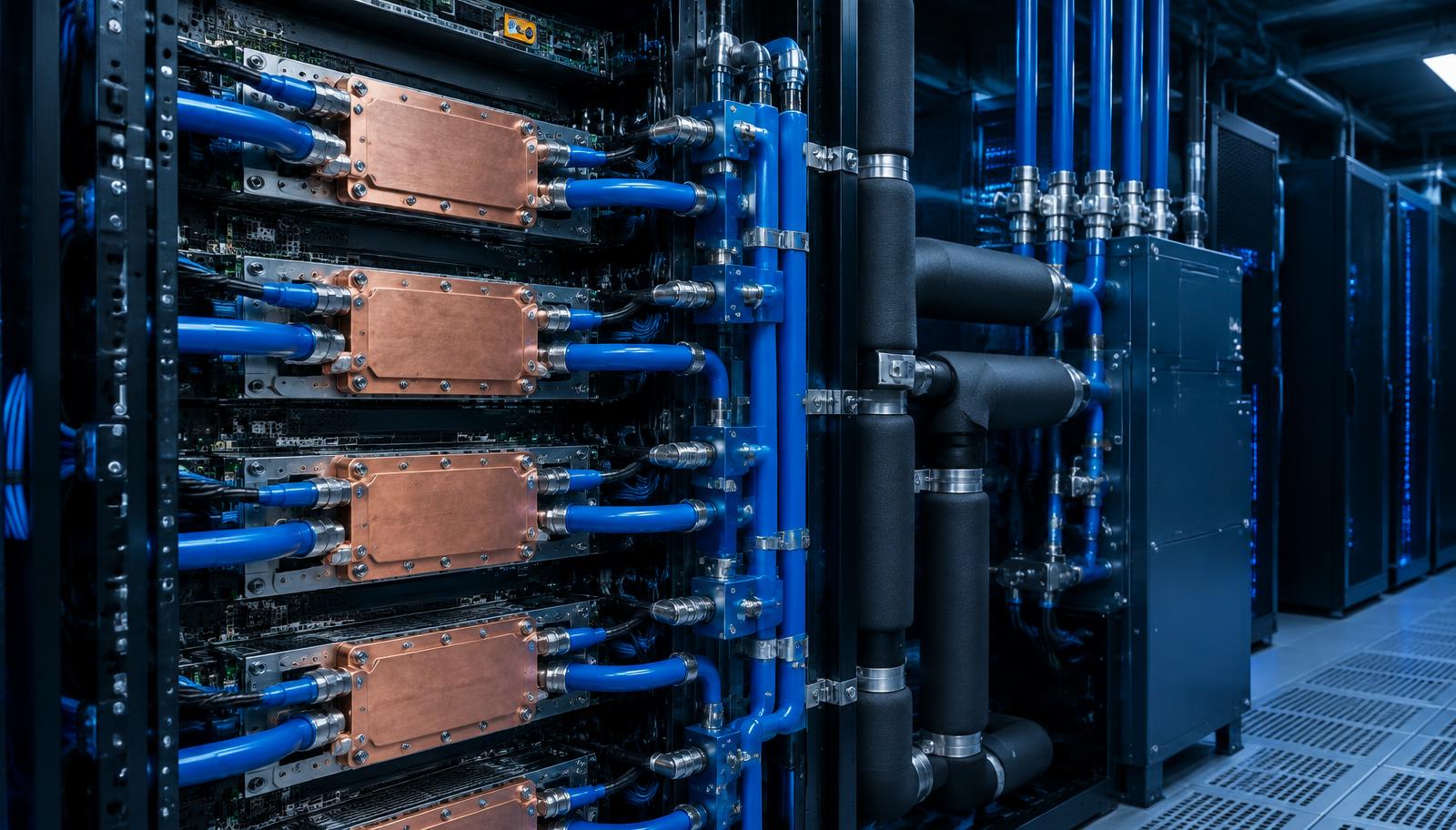
- The IT cooling circuit collects heat from processors, accelerators, and other compatible components through cold plates or another server-level cooling mechanism.
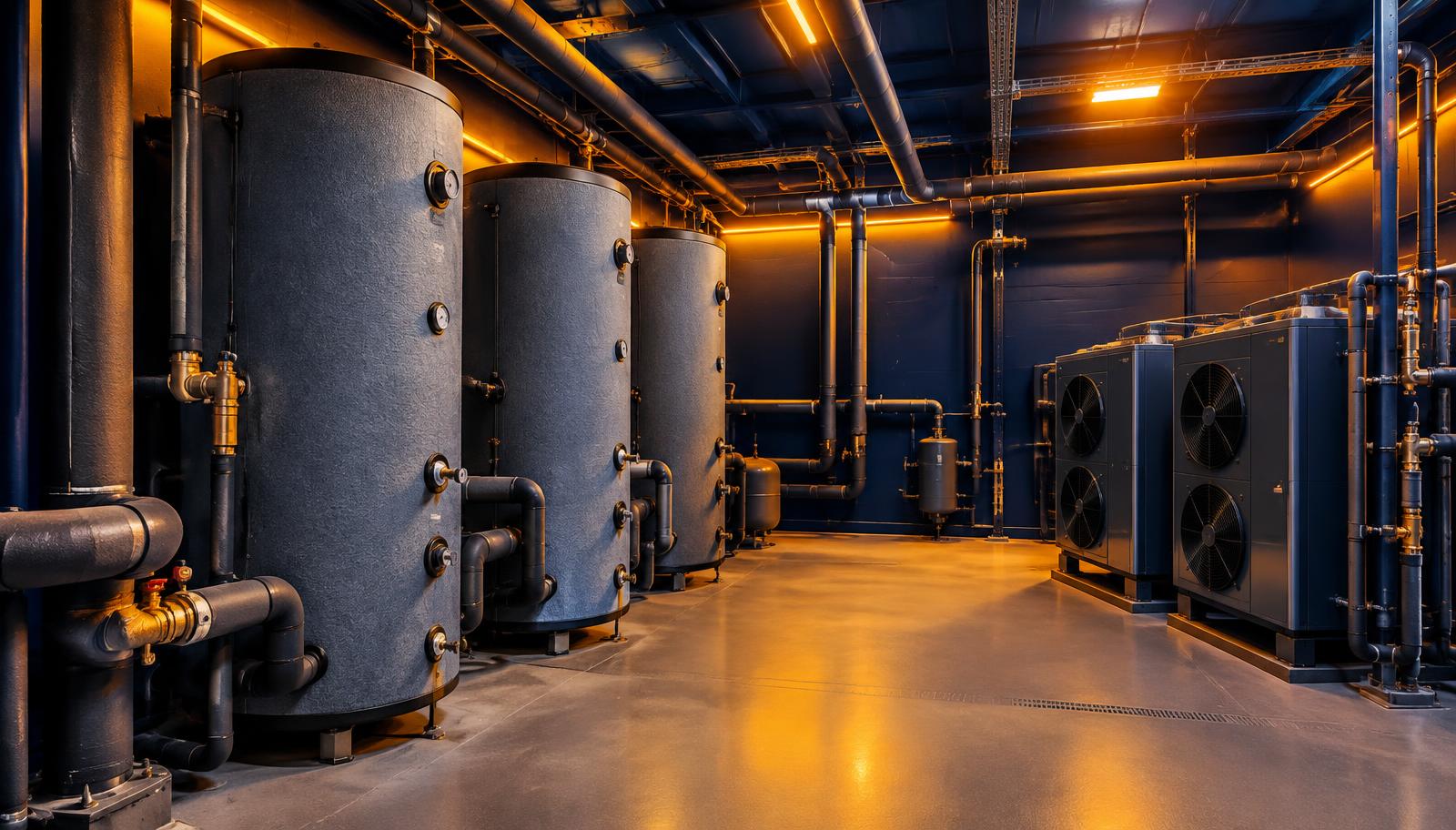
- The facility cooling circuit transfers heat through coolant distribution units and heat exchangers, separating sensitive IT coolant from the wider facility infrastructure where appropriate.
- The heat-rejection circuit transfers the heat to dry coolers, cooling towers, seawater heat exchangers, or another suitable heat sink.
- 01IT cooling circuit
- 02Coolant distribution unit
- 03Facility cooling circuit
- 04Heat exchanger
- 05Heat rejection or recovery
These circuits perform different functions. Their temperatures, pressure losses, flow requirements, and operating constraints must be coordinated.
Why temperature matters
A cooling system does not need to deliver the coldest possible fluid. It needs to maintain acceptable component temperatures while using energy efficiently.
Higher allowable coolant temperatures can improve the feasibility of dry cooling and certain forms of heat recovery. Lower temperatures may be required for particular equipment or operating conditions, potentially increasing refrigeration demand.
The optimal design depends on the actual hardware specifications, climate, heat exchanger approach temperatures, and reliability requirements.
Advanced architectures
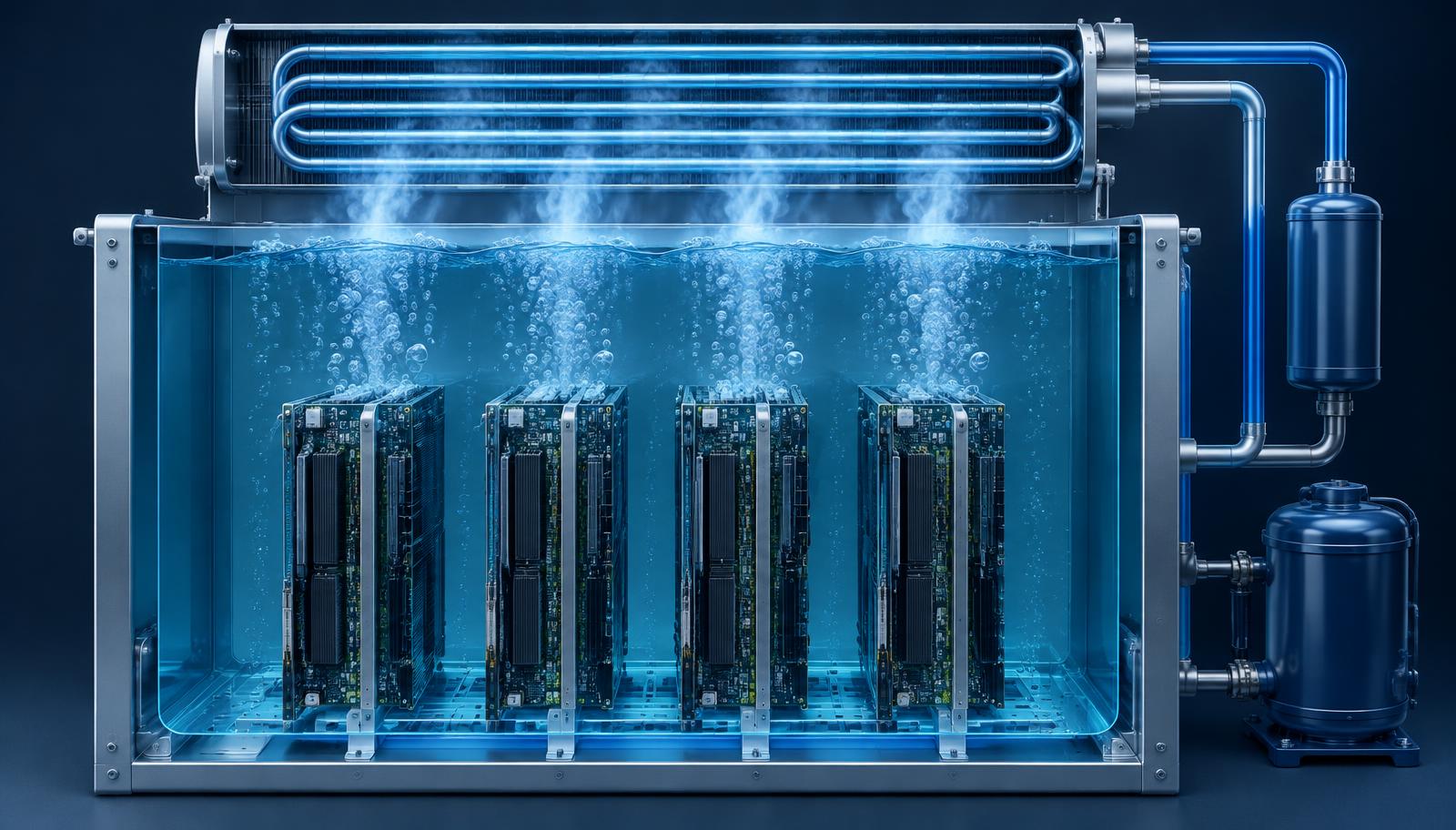
Emerging and established approaches include direct-to-chip liquid cooling, single-phase immersion, two-phase immersion, two-phase direct-to-chip cooling, and hybrid liquid-to-air or liquid-to-water heat rejection.
Each architecture has different requirements for materials compatibility, fluid handling, maintenance, controls, and equipment integration.
A complete assessment should compare the entire thermal chain rather than isolated cooling components.
Heat recovery as part of the design
Closed-loop cooling can also enable useful heat recovery.
Where suitable customers exist, the facility may supply preheated water for domestic hot water, industrial processes, or district heating. A heat pump can increase the delivered temperature when required, although it introduces additional electricity consumption.
Heat recovery is most attractive when a nearby heat user needs the available temperature for a substantial portion of the year.
Engineering considerations
A robust design should address:
- Thermal load at full and partial utilization.
- Coolant flow rates and pressure drops.
- Heat exchanger performance.
- Pumping and auxiliary electricity.
- Redundancy and fault isolation.
- Leak detection and maintenance access.
- Operating conditions during equipment failures.
- Integration with backup cooling.
- Lifecycle costs and potential heat recovery.
Conclusion
The next generation of AI cooling will require integrated thermal architectures that balance chip performance, facility efficiency, operational reliability, and heat-rejection requirements.
This article is general engineering commentary. Final designs require project-specific engineering and appropriate professional review.
Sources & further reading
- ASHRAE — Technical resources on data center thermal guidelines (TC 9.9)
- Open Compute Project — Cooling Environments project
This article explains general engineering principles and does not rely on proprietary data or measured project results. Formal citations for any externally derived figures are under editorial review before publication.
Discuss a Closed-Loop Cooling Project
Planning a liquid-cooled deployment or retrofit? We can review loop temperatures, hydraulics, redundancy and heat-rejection options across the complete thermal chain.